
Quran Learning
Quran Learning Games for Kids Online: Best Free & Interactive Options (2026)
Jun
:
This article is published by The Quranic Institute— a trusted online Quran learning platform serving families across the USA, UK, Canada, and Australia.
A Complete Parent’s Guide by Hafiza Asma Zahid Habib | Hafiza-e-Quran | Alima | Master in Islamic Studies | 10+ Years Quran Teaching Experience
Meta Description: Does your child dread Quran time every single day? These free online Quran learning games have already helped thousands of families turn tears into excitement. Here’s what’s actually working in 2026.
Picture this: A 6-year-old boy named Hamza who screamed, cried, and ran away every single time his mum said “Quran time.” She tried everything — sticker charts, extra dessert, even outright bribery. Nothing worked. Then one evening she let him play a simple Arabic letter matching game on her phone for just 10 minutes before bed. Two months later? That same little boy was sitting down on his own to memorize Surah Al Fatiha.
I’ve heard this kind of story more times than I can count from parents in my classes and online sessions.
Quran learning games for kids online don’t just make lessons “more fun.” They actually change how a child’s brain connects with this learning. They make the hard work feel like something worth coming back to tomorrow. In this guide, I’m going to walk you through the best free and interactive options available in 2026, how to use them based on your child’s age, and the mistakes I see parents make all the time without even realizing it.

What Are Quran Learning Games — And Why Do They Actually Work?
Here’s something most parents need to hear: your child is not rejecting the Quran. They’re rejecting sitting completely still and repeating the same line over and over while their brain slowly switches off. That’s not a child problem. That’s a learning format problem. And Quran learning games fix it directly.
The Real Science Behind Game-Based Learning in Religious Education
This isn’t just a theory. Educational psychology research consistently shows that children remember roughly 40% more content when they’re emotionally engaged during learning compared to sitting through passive lessons. So what makes a child emotionally engaged? A challenge. A reward. The feeling of winning. A good game delivers all three at the same time.
When your child earns points for correctly identifying a harakat, or beats their sibling at a “Finish the Ayah” challenge, their brain releases dopamine. That’s the chemical behind motivation and memory. It’s not a trick or a shortcut. It’s simply how the human brain is built — and game-based learning works with that reality instead of fighting it.
There’s also something researchers call retrieval practice that makes a huge difference here. When a child plays a surah completion game and has to recall the next line under a little bit of gentle pressure, their brain is doing something completely different from just passively listening to a recitation. Studies in cognitive psychology show that retrieval practice creates stronger long-term memory than passive listening — even when the passive listening session is three times longer. That’s not a small gap.
How Online Quran Games Are Different From Traditional Teaching
Let me be completely honest here. Online interactive Quran games are not replacing teachers. Not even close. What they do very well is handle the volume side of learning — the sheer number of times a child needs to see an Arabic letter before it becomes automatic, or hear an ayah before they can recall it mid-recitation without freezing.
Researchers estimate that children need somewhere between 50 and 100 exposures to a new Arabic letter before it truly sticks in long-term memory. Games make those exposures feel quick and rewarding. A qualified teacher makes them accurate and spiritually meaningful. Both are necessary. Neither one is optional.
Age-by-Age Readiness Guide (Ages 3 to 15)
This matters more than most parents realize. Put the wrong game in front of the wrong age group and the child loses interest in two minutes — and often refuses to try again.
| Age Group | Best Game Type | Session Length |
| Ages 3–5 | Letter sounds and simple audio matching | 5–8 minutes |
| Ages 5–8 | Short surah completion and letter recognition | 10 minutes |
| Ages 9–12 | Tajweed listening games and vocabulary matching | 15 minutes |
| Ages 13–15 | Quiz bowl formats and timed recitation challenges | 20 minutes |
Teenagers especially need special thought here. A colorful cartoon-based Arabic letter game that works beautifully for a 6-year-old will make a 13-year-old roll their eyes and walk away. Age fit isn’t optional — it’s the difference between a tool that actually works and one that just sits unused on your child’s tablet.
Best Free Online Quran Learning Games for Kids in 2026
Free doesn’t mean low quality here. Some of the strongest platforms available right now cost absolutely nothing — especially for beginners and intermediate learners. You just need to know what to look for.
Arabic Letter Recognition Games (Beginner Level)
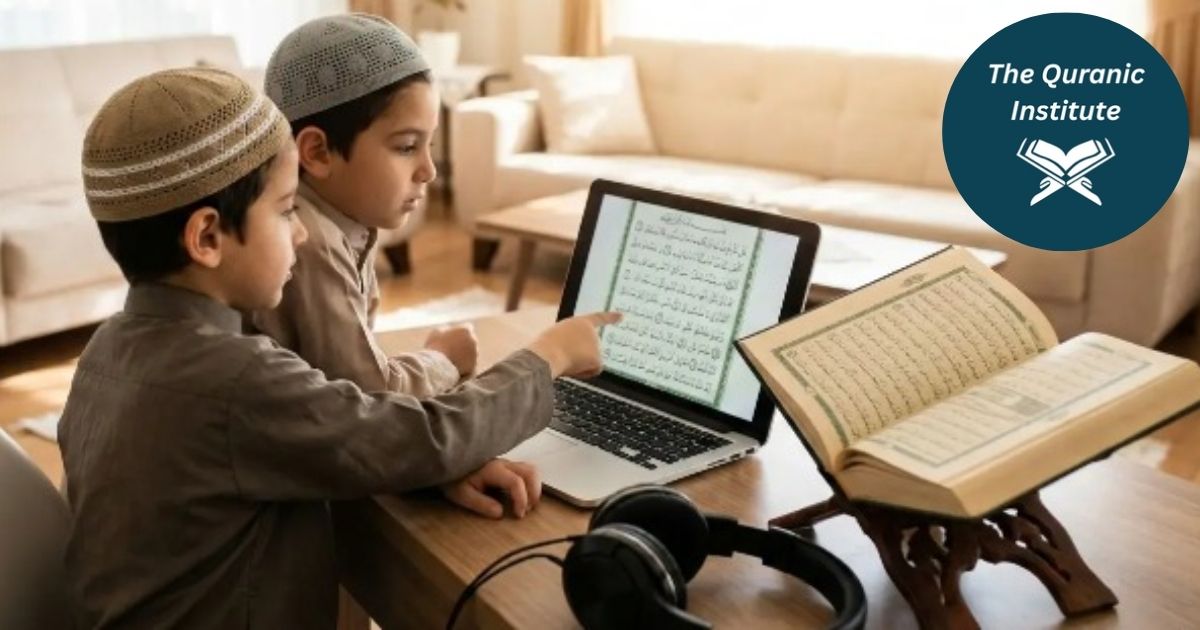
Before moving into surah memorization or tajweed, children should first master the Arabic alphabet through a structured Learn Noorani Qaida Online program. Not surahs. Not tajweed rules. Letters first. Free browser-based games on platforms like Noor Academy allow children to match Arabic letters to their sounds, recognize harakat like fatha, kasra, and damma inside real words, and trace letters on screen while hearing them pronounced correctly.
What makes these free Arabic learning games genuinely effective is spaced repetition. Letters a child gets wrong keep showing up more frequently until they’re fully remembered. That’s not a random feature — it’s the same learning mechanism behind language apps like Duolingo, applied to Quranic Arabic. For complete beginners aged 3 to 6, spending just 10 focused minutes on letter recognition before touching anything else.This foundation is exactly why many parents enroll their children in Online Quran Classes for Kids before starting advanced Quran studies.
Tajweed Practice Games (Intermediate Level)
Combining these activities with professional Online Tajweed Classes can help children apply tajweed rules correctly from the beginning. Rules like ghunna, idgham, and ikhfa feel completely abstract until children have heard them applied in real words, hundreds of times, before ever seeing the formal rule written down. Online tajweed games for kids solve this by turning rules into listening challenges. Children hear two recitations side by side and decide which one applies the rule correctly. After enough rounds, their ears start automatically catching mistakes — even in their own recitation.
This is honestly as close as it gets to how native Arabic speakers absorb tajweed: through thousands of hours of correct listening long before any formal study ever begins. Sheikh Mishary Rashid Al Afasy has spoken about learning this way in his own early education. These games aren’t mimicking a shortcut — they’re mimicking the actual natural process of how language is absorbed.
Surah Memorization and Hifz Games (Advanced Level)
These techniques work even better when paired with a structured Online Hifz Program guided by experienced Quran teachers. Children arrange scrambled ayahs into the correct order, fill in missing words from a partially shown verse, or race a timer to recite a full surah from memory. These formats force active recall rather than simple recognition.
I worked with a parent whose 8-year-old had spent two full months trying to memorize Surah Al Mulk through traditional daily drilling with almost no real progress. Three weeks after adding a combination of online surah games and regular background listening, she had it down. What changed wasn’t the content or the schedule. What changed was how the repetitions felt to her brain.
Quranic Vocabulary and Tafsir Games
This is the section most parents skip entirely — and it’s genuinely a shame. Understanding even 20 to 30 key Quranic words completely transforms a child’s experience of recitation. Vocabulary games that match Arabic words to their English meanings through flashcard formats and drag-and-drop translation activities produce results surprisingly quickly when you start with words drawn directly from surahs the child already recites.
Start with words like رَبِّ (Lord), رَحْمَٰن (Most Merciful), and قُلْ (Say) from Juz Amma. When a child recognizes these inside a surah they already know by heart, something genuinely clicks.This deeper understanding is one of the key goals of our Quran Classes for Beginners. That shift in experience builds a kind of motivation that no reward chart in the world can manufacture.
Best Interactive Quran Games by Learning Goal
Picking the wrong game type for a specific goal wastes everyone’s time and energy. Here’s a straightforward guide based on what each game format actually trains inside a child’s brain:
| Learning Goal | Recommended Game Type | What It Actually Trains |
| Letter recognition | Flashcard and audio matching | Visual and auditory memory pairing |
| Pronunciation | Echo and tajweed listening games | Ear training before rule memorization |
| Surah memorization | Completion and sequence games | Active recall under gentle pressure |
| Vocabulary | Word hunt and translation match | Meaning connection to known recitation |
Games That Teach Arabic Letters and Harakat
Letter games that include harakat from the very first session are significantly better than games that introduce them later as a separate step. Because Arabic letters change shape depending on where they appear in a word, look for platforms that show both isolated and joined forms together from the beginning. Audio paired with visual display is non-negotiable for children under 8. Text-only formats simply don’t stick at this developmental stage — their brains are still building the connection between sound and symbol, and they genuinely need both together.
Games That Reinforce Tajweed Rules Naturally
The best tajweed games for kids don’t actually teach rules at all. They let children hear the rules performed correctly over and over again until their ears start recognizing violations on their own. This is reverse learning: experience first, understanding second. It sounds counterintuitive — but it’s exactly how every fluent speaker of any language actually absorbs grammar. Nobody explains subject-verb agreement to a toddler. They simply hear correct language until correct language sounds right. Tajweed games work on the exact same principle.
Games That Build Quranic Vocabulary
Pull vocabulary words directly from surahs your child is currently memorizing. Recognizing ٱللَّهُ and رَبِّ inside Surah Al Fatiha creates a genuine “I understand this” moment that deepens both memorization and comprehension at the same time. It also gives children a powerful head start for formal Quranic Arabic study later, because they arrive with familiar vocabulary already in place rather than starting completely from zero.
Games That Support Surah Memorization Step by Step
Sequence games are among the most effective memorization tools available because they force a child to generate the next line independently rather than simply repeat it when prompted. Educational researchers call this the testing effect: being tested on material — even before you fully know it — dramatically strengthens long-term retention compared to studying the same content for three times as long. Good surah memorization games are essentially testing machines running in the background. Kids just think they’re playing.
Top Free Websites and Apps Offering Quran Games for Kids (2026 Updated List)
Browser-Based Platforms (No Download Needed)
For families who want to start right away without installing anything, several strong platforms work directly in any web browser. Noor Academy offers free letter games and surah audio with highlighted scrolling text that children’s eyes follow naturally. QuranFlash provides clean, clear Quran text with audio that works well as a listening companion alongside other activities.Families looking for personalized support can also start with a Free Quran Trial Class to identify the best learning path for their child.
Mobile Apps for iOS and Android
For kids who learn better on tablets or phones, apps like Quran Companion and Zekr offer structured Quran learning games with progress tracking you can review as a parent. Most have solid free tiers for beginners with optional paid upgrades for more advanced content. Before installing anything, check two things: first, whether qualified Islamic scholars were involved in developing the content; second, whether the Arabic text matches standard Uthmani script. Both matter enormously for children who are forming their earliest Quran habits — because fixing incorrect patterns after they’re already established is always much harder than getting it right from the very beginning.
What to Look for Before Choosing a Platform
Three questions every parent should ask. The same standard should apply when selecting Qualified Quran Teachers for online learning. Is the platform free of advertisements — or at minimum, free of ads that could expose children to inappropriate material? Does the difficulty level genuinely match where your child is right now, not where you hope they’ll be in a few months? An app that’s too advanced will frustrate a child into refusing to come back faster than no app at all. Start easier than you think you need to, and build from there.
Offline Quran Games You Can Play at Home Alongside Online Learning
Online games work best when they’re backed up by offline activities away from screens. Don’t think of these as competing approaches — think of them as two sides of the same good habit.

Printable Quran Flashcard Activities
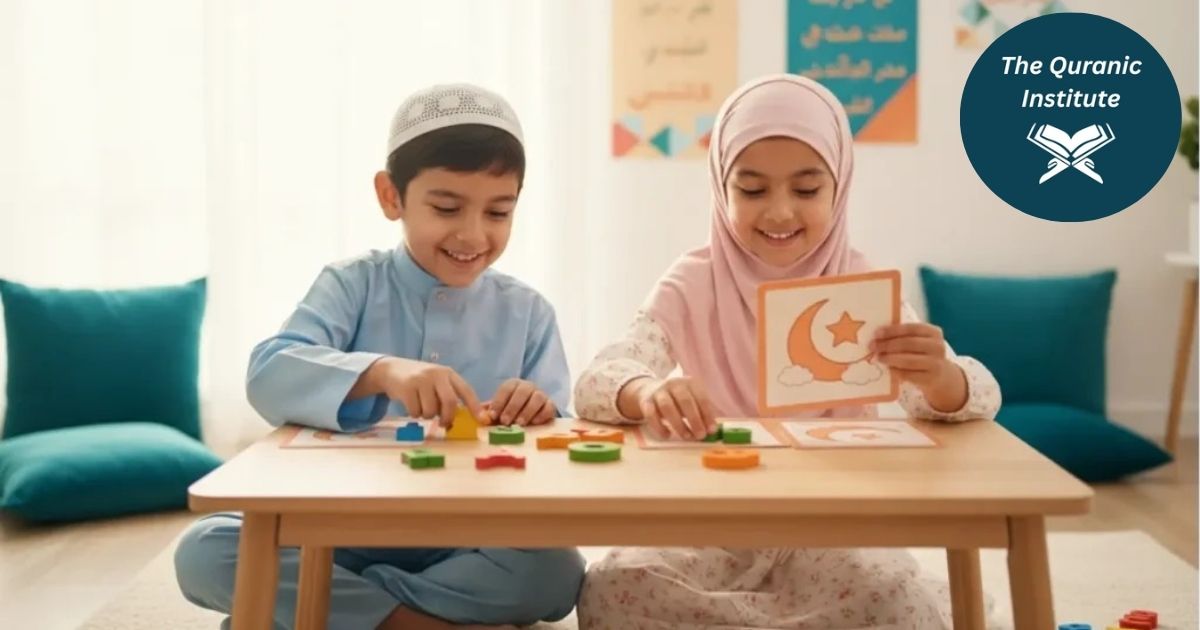
Print Arabic words from surahs your child is currently memorizing in large, clear font on basic card stock. Use them for simple matching games, memory card pairs, or a fastest-answer quiz between siblings. Quran flashcard activities cost nothing beyond printer paper and about 20 minutes to set up. Children who physically handle cards develop a different kind of familiarity with Arabic words than those who only ever interact with them on a screen. There’s something about turning a card over in your hands and reading the word aloud that creates a physical memory anchor that screens simply cannot replicate.
DIY Ayah Jenga and Quran Ball Games
Write individual words from Surah Al Fatiha or short Juz Amma surahs on Jenga blocks with a permanent marker. Children recite each word aloud before placing or removing a block. For larger family gatherings, the Quran rotating ball game is simple, active, and genuinely effective. Children pass a soft ball while recitation plays in the background. Whoever holds the ball when the audio pauses has to recite the next ayah. I watched a family use this game for 25 solid minutes at a weekend gathering. By the end, every child in that room had Surah An Nas practically memorized — and not a single one had thought of it as a study session.
Family Quran Quiz Night: How to Set It Up
Set aside 20 minutes once a week — ideally after Isha prayer — for a family Islamic quiz night. Mix quiz-bowl style questions with recitation challenges, and rotate who gets to be the one asking. Keep score on a whiteboard. Offer a small weekly reward for the winner. Here’s something parents consistently notice: children who get to host the quiz study harder in the days leading up to it than the children who just answer questions. Giving a child the role of teacher, even briefly, completely changes their relationship to the material.
How to Build a Weekly Quran Game Routine for Your Child
Building a sustainable routine is honestly where most parents fall off after the initial excitement fades. Consistency matters far more than intensity. And the single most reliable way to build consistency is keeping the daily time commitment short enough that skipping it actually feels stranger than doing it.
Sample 7-Day Game-Based Learning Schedule (By Age Group)
Ages 5–8: 10 minutes of online letter recognition or surah completion games every day, with one offline flashcard activity on the weekend.
Ages 9–12: 15 minutes of online tajweed or Quranic vocabulary games Monday through Friday, with a family quiz night on Saturday after dinner.
Ages 13–15: 20 minutes of self-paced online Quran games, paired with a weekly recitation check-in with a parent or qualified tutor so accuracy stays on track alongside volume.
Balancing Screen Time With Offline Quran Activities
A practical rule that works well in real family routines: for every 10 minutes of online Quran game time, follow it with 5 minutes of offline recitation or physical flashcard practice. This prevents children from building a mental link between Quran learning and screens exclusively — an association that becomes much harder to break as children get older and their digital entertainment habits grow stronger. Keep the offline element present from the very beginning, even if it’s just 5 minutes of reciting aloud to you.
Tracking Progress Without Pressure
A Quran sticker reward chart on the fridge works for ages 5 to 10 far better than verbal praise alone. Every completed session earns a sticker. Five stickers earn a small reward: extra playtime, choosing dinner, a small outing. Here’s one critical distinction most parents miss: tie rewards to effort and showing up, not to memorization performance. Performance-based rewards backfire quickly the moment a child hits a difficult surah and suddenly feels like a failure despite genuine daily effort. Effort rewards keep motivation steady through the hard stretches
Common Mistakes Parents Make When Using Quran Games
Choosing Entertainment Over Educational Value
Not all Islamic games for children online are real learning tools. Some are genuine educational platforms built with Islamic educator input. Others are basically animated videos with Arabic letters floating across the screen occasionally. Spend 10 minutes playing any game yourself before making it part of your child’s regular routine. If you can’t identify a clear learning objective within the first few rounds, neither can your child’s brain — no matter how colorful and exciting the visuals are.
Skipping Noorani Qaida Before Jumping Into Games
This is the most common and most damaging mistake I see. Parents can build this foundation through a comprehensive Noorani Qaida Online Course designed specifically for beginners. Children who skip it and jump straight into surah memorization games often build incorrect phonetic habits that are genuinely difficult to fix later. Games are practice tools. They reinforce what a child already partially knows. Starting games before your child knows their Arabic letters is like downloading a piano practice app before they know what middle C sounds like. The app simply requires knowledge the child doesn’t have yet.
Over-Relying on Games Without Teacher Guidance
Free Islamic games online are genuinely valuable as part of a broader learning structure. But on their own, they cannot correct your child’s makhraj — the precise articulation point of each Arabic letter — mid-recitation. They cannot explain why a specific tajweed rule applies to one word but not the word directly before it. However, One-on-One Quran Classes remain essential for correcting pronunciation and improving recitation accuracy. Qualified teachers with proper ijazah handle precision and understanding. Both are necessary. Neither one fully replaces the other — and trying to use one as a substitute for the other always shows up eventually in the child’s recitation quality.
How Online Quran Classes Complement Game-Based Learning

When Games Alone Are Not Enough
Picture this: your child has been playing a surah memorization game every day for three weeks. They nail every ayah in sequence when the game gives them a cue. Then you ask them to recite from memory with no prompts at all. They freeze after the third line. This happens because games build recognition — responding correctly when shown a cue. That’s why many parents combine games with Online Quran Lessons for Children to achieve balanced progress. Games and classes aren’t competing with each other. They’re complementary — and children who use both consistently outperform those using either one alone.
What to Look for in an Online Quran Tutor for Kids
Prioritize tutors who hold a proper ijazah in Quran recitation, have real documented experience teaching children specifically (not just adults), and use genuinely age-appropriate curriculum rather than adult materials delivered at a slower pace. Al Azhar-trained teachers who also have specific child pedagogy training represent the strongest combination available for non-Arabic-speaking children.Working with Certified Quran Tutors helps ensure children receive authentic and effective Quran education.
How Structured Classes Plus Games Create the Fastest Results
Children who combine regular online Quran classes with daily game-based practice reach milestones consistently faster than those using either approach on its own. Classes build correct foundations and catch mistakes before they become deeply ingrained habits. Games build the volume of practice that turns those foundations into automatic skill. This balanced approach is the foundation of successful Quran Learning Programs for children. Accuracy without fluency makes recitation feel labored. Fluency without accuracy makes it incorrect. You need both — and games plus qualified instruction deliver both.
FAQ: Quran Learning Games for Kids Online
At What Age Can Kids Start Playing Quran Learning Games Online?
Children as young as 3 benefit from simple Arabic letter sound games with clear audio feedback. Most interactive Quran games become genuinely productive from age 5 onward, when children have enough sustained attention to follow game rules and actually carry what they practiced into the next session.
Are Free Quran Learning Games as Effective as Paid Options?
For beginner and intermediate levels, several free platforms are genuinely strong and absolutely worth using before spending any money. Paid platforms typically offer better structured progression, session-by-session progress tracking, and content reviewed by certified Islamic educators. If your child is working seriously toward hifz, a paid platform or live online tutor becomes worth the investment relatively quickly.
How Many Minutes Per Day Should My Child Spend on Quran Games?
Ages 4–6: 10 minutes maximum per session. Ages 7–10: 15 minutes. Ages 11–15: up to 20 minutes. Short and daily beats long and occasional by a wide margin at every age group. Five minutes every single day is genuinely worth more than 45 minutes twice a week.
Can Quran Games Fully Replace a Quran Teacher for Young Children?
No. And honestly, any platform claiming otherwise is misleading you. A qualified Online Quran Teacher for Kids can provide guidance that no app or game can fully replace. Children need both — especially before age 10, when foundational pronunciation habits are still forming and easiest to correct.
A qualified Online Quran Teacher for Kids can provide guidance that no app or game can fully replace.
What Is the Best Quran Learning Game for a 5-Year-Old Complete Beginner?
Start with Arabic letter matching games that include clear audio pronunciation for every single letter. Platforms using spaced repetition for Arabic letter recognition are ideal at this stage. Don’t move into surah memorization games until your child can independently identify at least 15 to 20 Arabic letters without needing audio prompts to help them along.
Are There Quran Games Designed for Non-Arabic-Speaking Kids?
Yes — several strong platforms were built specifically for English, Urdu, French, and other language-speaking Muslim families. They offer instructions and word meaning explanations in the child’s own language while keeping all Quranic content in authentic Arabic. That’s exactly the right approach: make the interface accessible in the child’s language, and keep the Quran itself in its original form.
How Do I Know If an Online Quran Game Is Educationally Sound and Safe?
Check whether Islamic scholars or certified educators are credited in the platform’s development. Verify that Arabic text matches standard Uthmani script. Test the audio recitation against a known trusted reciter for accuracy. If the platform runs advertisements, preview what kind before giving your child unsupervised access. Platforms built specifically for Muslim children by organizations with a clear Islamic educational mission are almost always more accurate and safer than general educational apps that include Quran as one small feature among dozens.
Final Thoughts: Turning Screen Time Into Sacred Learning Time
Screen time is part of almost every child’s life now. Whether those minutes pull a child toward distraction — or toward a real, growing relationship with Allah’s words — largely depends on what fills them.
Quran learning games for kids online won’t make this journey effortless. Nothing genuinely does. But they make the necessary effort feel like something worth returning to tomorrow. And in Quran learning, tomorrow matters more than today.
Start with one game that honestly matches where your child is right now. Add a second after two consistent weeks. Build a short offline routine around it. Then find a qualified teacher by booking a Free Trial Quran Class that can provide the structured foundation no game will ever be able to replace. Every surah your child memorizes, every Arabic letter they recognize automatically, every tajweed rule they apply without even thinking — it all starts with one decision: making the learning feel worth their time.
Now you have everything you need to make that decision well. Insha’Allah
★ About the Author
★ Hafiza Asma Zahid Habib
Hafiza-e-Quran | Alima | Master in Islamic Studies | SEO Content Writer
Hafiza Asma completed her Quran memorization at age 10 — starting her Hifz journey at just 7 — and comes from a family where all five siblings are Huffaz-e-Quran. She holds a degree in Islamic Studies and has over 10 years of experience teaching Quran to students of all ages across the USA, UK, Canada, and Australia. Alongside her Islamic scholarship, she is also a skilled SEO Content Writer and Digital Marketer specializing in E-E-A-T-optimized Islamic content. She runs her own online Quran academy, where qualified instructors deliver engaging, age-appropriate lessons built for real results.
🌍 TheQuranicInstitute.com | 📚 10+ Years Experience | ♥ All 5 Siblings Are Huffaz
